
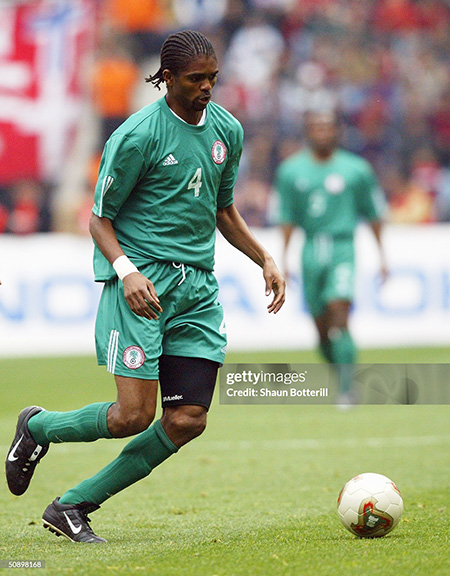
In an era defined by power forwards and explosive wingers, Nwankwo Kanu stood apart — tall, graceful, unpredictable. His career was a masterclass in technical finesse, quiet leadership, and resilience. From the dusty pitches of Owerri to the grand stages of Amsterdam, Milan, and London, Kanu’s journey is one of triumph, survival, and legacy.
⚽ Early Spark: Nigeria’s Golden Boy
Born in 1976 in Owerri, Nigeria, Kanu first rose to prominence with Nigerian club Iwuanyanwu Nationale before catching the eye of European scouts. His breakout moment came in 1993, when he led Nigeria to victory at the FIFA U-17 World Championship, showcasing a rare blend of vision, balance, and composure.
That same year, he signed for Ajax Amsterdam, launching a career that would span over 15 years at the highest level.
🏆 Ajax (1993–1996): The European Launchpad
Kanu arrived at Ajax Amsterdam in 1993, fresh off captaining Nigeria to victory at the FIFA U-17 World Cup. At just 17, he joined a squad brimming with future stars — Clarence Seedorf, Edgar Davids, Patrick Kluivert — under the tactical genius of Louis van Gaal.
In his first season, Kanu scored 25 goals in 54 appearances, quickly establishing himself as a technically gifted forward with an uncanny ability to link play and unlock defenses. He wasn’t a traditional striker — more of a roaming artist, gliding between lines, combining with midfielders, and delivering deft touches in tight spaces.
His crowning moment came in the 1994–95 UEFA Champions League campaign. Ajax went unbeaten throughout the tournament, culminating in a 1–0 win over AC Milan in the final. Kanu came off the bench to replace Seedorf, helping to close out the match and secure Ajax’s fourth European crown.
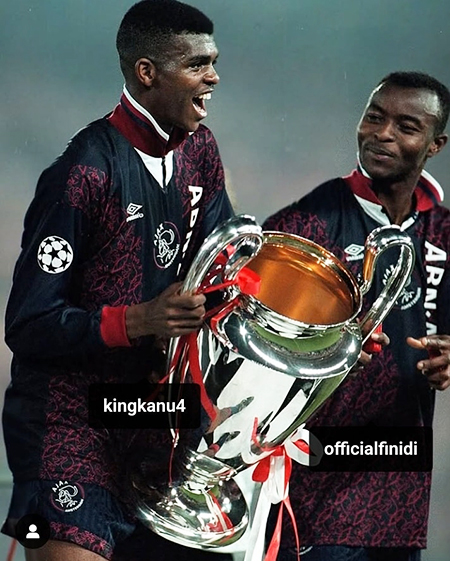
Kanu and fellow Nigerian Finidi George
That season, Ajax also won the Eredivisie, the UEFA Super Cup, and the Intercontinental Cup, making Kanu part of one of the most dominant club sides of the 1990s. His time in Amsterdam laid the foundation for his tactical intelligence and composure under pressure — traits that would define his career.
Inter Milan (1996–1999): Adversity and Triumph
In 1996, Kanu joined Inter Milan, but his career took a dramatic turn. During his medical, doctors discovered a serious heart defect. The diagnosis threatened not just his career, but his life.
After undergoing successful open-heart surgery in the USA by doctors who had operated on NBA athletes who had suffered similar defects, Kanu made a courageous return to football. Though his time at Inter was limited in minutes, his comeback became a symbol of resilience and hope
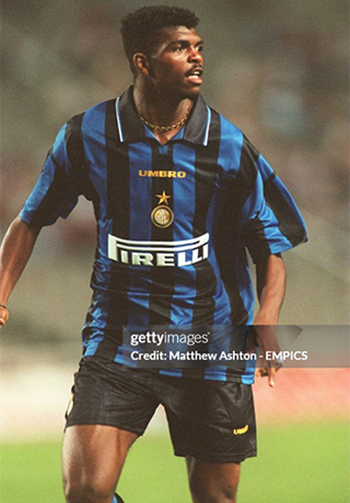
Arsenal (1999–2004): The Cult Hero and the Invincible
Kanu joined Arsenal in February 1999. Arsène Wenger saw in him a player of rare elegance and unpredictability, and Kanu quickly repaid that faith.
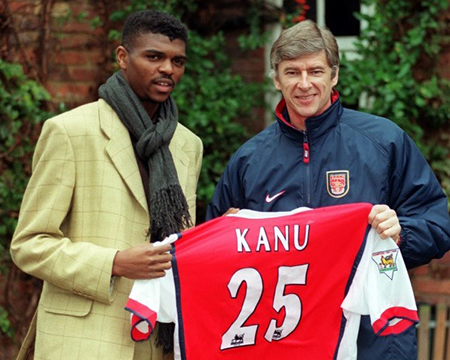
Kanu and the legendary Arsene Wenger
His impact was immediate. In October 1999, he scored a sensational 15-minute hat-trick against Chelsea at Stamford Bridge, turning a 0–2 deficit into a 3–2 win. The third goal, scored from an impossible angle near the corner flag, remains one of the Premier League’s most iconic moments
Over five seasons at Highbury, Kanu won:
🏆 2 Premier League titles
🏆 2 FA Cups
🏆 1 Community Shield
But it was the 2003–04 season that etched his name into football folklore. Kanu was part of the legendary “Invincibles” squad — the Arsenal team that went the entire Premier League season unbeaten. Though his minutes were limited due to competition and his participation in the 2004 Africa Cup of Nations, Kanu played in nine league matches before leaving for international duty. Upon his return, he found it difficult to reclaim his spot in a side that was firing on all cylinders.
Still, his presence in the dressing room was vital. A seasoned campaigner with Champions League pedigree, Kanu brought calm, experience, and humility to a squad filled with stars. He finished his Arsenal career with 44 goals in 198 appearances, and remains one of the most beloved figures in the club’s history.
West Bromwich Albion (2004–2006): The Survivor’s Chapter
Kanu joined West Brom in 2004, helping the club avoid relegation in dramatic fashion. His leadership and experience were vital in a squad fighting for survival.
Though his goal tally was modest, his presence was immense — mentoring younger players and delivering key performances in crunch matches.
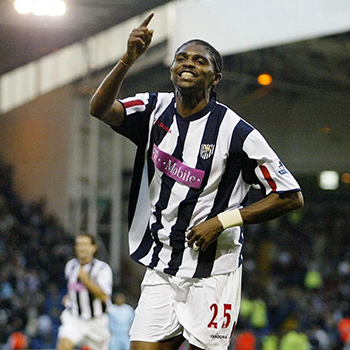
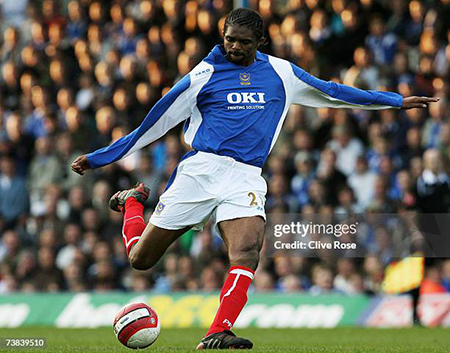
Portsmouth (2006–2012): The Veteran’s Glory
At Portsmouth, Kanu enjoyed a late-career renaissance:
🏆 FA Cup winner (2008) — scoring the winning goal in the final against Cardiff City
⚽️ Top scorer in the cup run
🧭 Became a symbol of calm and class in a turbulent club environment
🏆 International Career: A National Treasure
Kanu’s legacy with Nigeria is legendary: Olympic Gold Medal (1996) — scored twice vs Brazil in the semifinal, including a golden goal. Kanu captained the Super Eagles with grace and longevity through several AFCON and World Cup appearances. He remains one of Nigeria’s most decorated and beloved footballers

❤️ Beyond Football: The Kanu Heart Foundation
After surviving his heart condition, Kanu founded the Kanu Heart Foundation, which has helped hundreds of children across Africa receive life-saving surgeries. His off-field impact rivals his on-field brilliance.
Legacy: More Than a Footballer
Nwankwo Kanu’s career wasn’t defined by stats alone — it was defined by style, spirit, and substance. He won trophies, overcame life-threatening adversity, and inspired millions. Whether gliding past defenders or lifting hearts through his foundation, Kanu remains a towering figure in football history.

Source: Redaction Ballocentre.com
Images: GETTY, Ajax Amsterdam, Inter Milan, Arsenal FC, west Bromwich, Portsmouth, Punchng.com
Légendes
Légendes

Légendes
Légendes
De New-Bell à la présidence de la Fecafoot, l’ascension d’une légende africaine et mondiale.