

In the pantheon of Brazilian football legends, Romário de Souza Faria — known simply as Romário — occupies a space all his own. Neither as flamboyant as Ronaldinho nor as physically imposing as Ronaldo, Romário was something else entirely: a master of economy, a predator in the box, and a man who turned scoring into an art form.
With over 700 career goals and a World Cup winner’s medal to his name, his story is one of audacity, instinct, and a relentless belief in his own genius.
⚽ From Vila da Penha to the World Stage
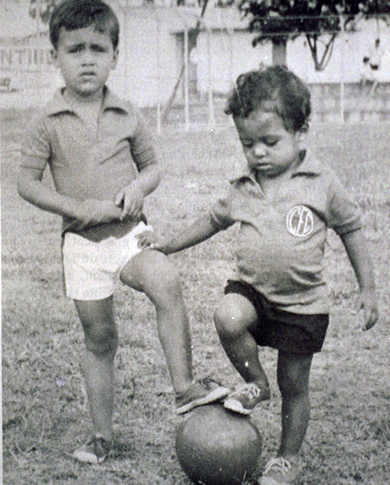
Born on January 29, 1966, in the working-class neighborhood of Vila da Penha in Rio de Janeiro, Romário’s rise was anything but conventional. Spotted at the age of 13 by local club Olaria, he quickly caught the attention of Vasco da Gama, where he would begin to forge his legend.
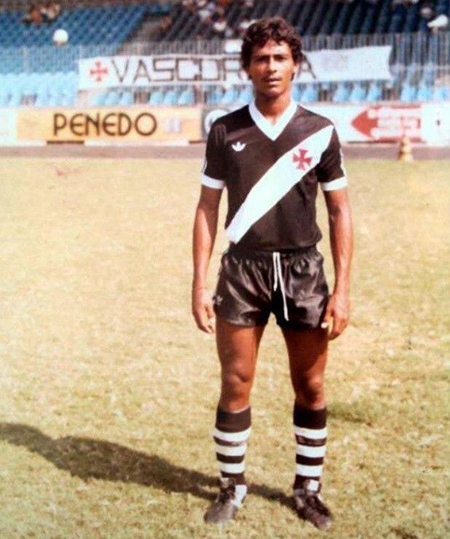
By the late 1980s, he had already won two Campeonato Carioca titles and was Brazil’s top scorer at the 1988 Seoul Olympics, where he led the Seleção to a silver medal.
The PSV Years: Goals and Growing Pains
Romário’s move to PSV Eindhoven in 1988 marked his arrival in Europe — and the beginning of his complicated relationship with discipline. In five seasons with the Dutch giants, he scored a staggering 125 goals in 148 appearances, helping PSV to three Eredivisie titles.
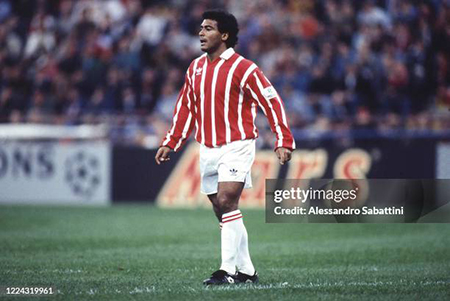
But his disdain for training, frequent absences, and cultural clashes with teammates made him a polarizing figure. Still, his brilliance on the pitch was undeniable. With a low center of gravity, explosive acceleration, and a trademark toe-poke finish, Romário was a nightmare for defenders.
Cruyff’s Dream Team and the La Liga Crown
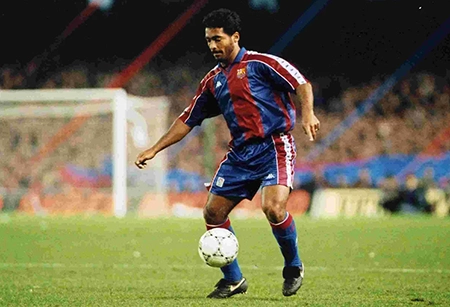
In 1993, Romário joined Johan Cruyff’s iconic “Dream Team” at Barcelona. His debut season was electric: 30 goals in 33 league games, a Pichichi Trophy, and a La Liga title. His hat-trick in the 5–0 demolition of Real Madrid at the Camp Nou remains one of the most iconic performances in Clásico history.
Yet, his time in Catalonia was short-lived. Clashes with Cruyff and a desire to return to Brazil saw him leave in 1995 — but not before leaving an indelible mark on Spanish football
The 1994 World Cup: Redemption and Glory
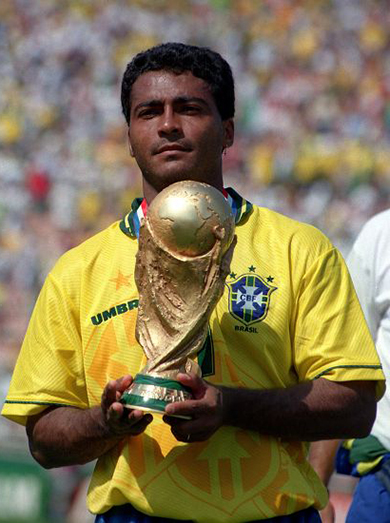
Romário’s crowning moment came in the summer of 1994. After being controversially left out of Brazil’s 1990 World Cup squad, he returned with a vengeance in the United States. Forming a lethal partnership with Bebeto, Romário scored five goals and was the heartbeat of a pragmatic Brazilian side that lifted the trophy after a tense final against Italy.
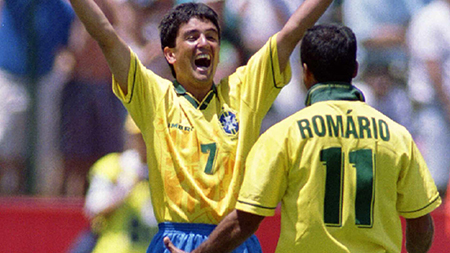
He was awarded the Golden Ball as the tournament’s best player and named FIFA World Player of the Year later that year.
The Eternal Journeyman
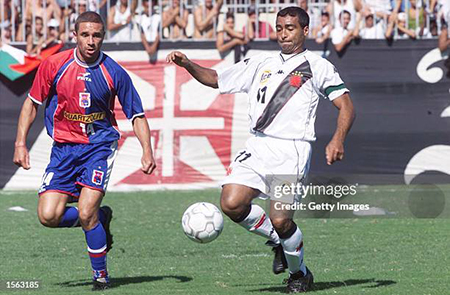
Romário’s post-Barcelona career was a whirlwind of returns and reinventions. He played for Flamengo, Valencia, Vasco da Gama, Fluminense, and even had stints in Qatar, the United States, and Australia.
His goal tally continued to rise, and in 2007, he claimed to have scored his 1,000th career goal — a milestone recognized by FIFA, though debated by statisticians. Regardless of the math, few players have ever matched his consistency in front of goal.
The Mind of a Maverick
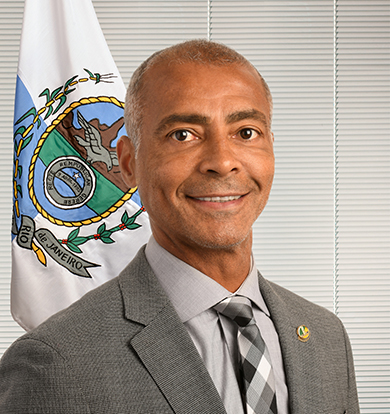
Romário was never just a footballer. He was a provocateur, a showman, and later, a politician. He famously said, “Training is for cowards,” and often skipped sessions, believing his natural talent was enough. Off the pitch, he transitioned into politics, becoming a senator for Rio de Janeiro and an outspoken advocate for social justice and anti-corruption reforms.
Legacy: The Little Genius
Nicknamed “Baixinho” (The Little One), Romário’s impact on football is immense. He redefined the role of the striker — not through brute force or blistering speed, but through timing, intelligence, and surgical precision. He inspired a generation of Brazilian forwards, from Ronaldo to Neymar, and remains a symbol of street-born brilliance.
In a sport often obsessed with physicality and systems, Romário was a reminder that football is, at its core, about goals — and few ever scored them with such style.
Source: Redaction Ballocentre.com
Images: GETTY, Not Just A Game Facebook, Romário Faria Facebook, FC Barcelona